The 30 is six feet longer and a foot taller than the 20. It takes up serious space, so plan for a job site or a wider driveway with no overhead obstructions. Once it's in place, it'll handle larger projects with a 3 ton weight limit.
We will place boards under the dumpster wheels upon request.
If you're running a multi-week project, talk to us about how you want to handle pickups and swap-outs. We can plan the schedule around your job's phases so you're not paying for empty dumpster time. Tell us when you'll be ready for a swap or pickup and we'll set the slot.
3 tons sounds like a lot, but dense waste fills it faster than you'd think. A 30-yard packed with shingles, plaster, or wet drywall will hit the limit before it's visually full. If the load is going to be heavy, mention it on the call so the expected overage charges can be talked through before delivery.
Standard delivery needs overhead clearance for the truck (no low branches or wires) and a flat, hard-surface drop point. The 30 is the size most likely to have access issues on residential properties: tight turns, low branches, soft lawns. If you're not sure, send us a photo of the spot and we'll tell you up front whether it'll work.
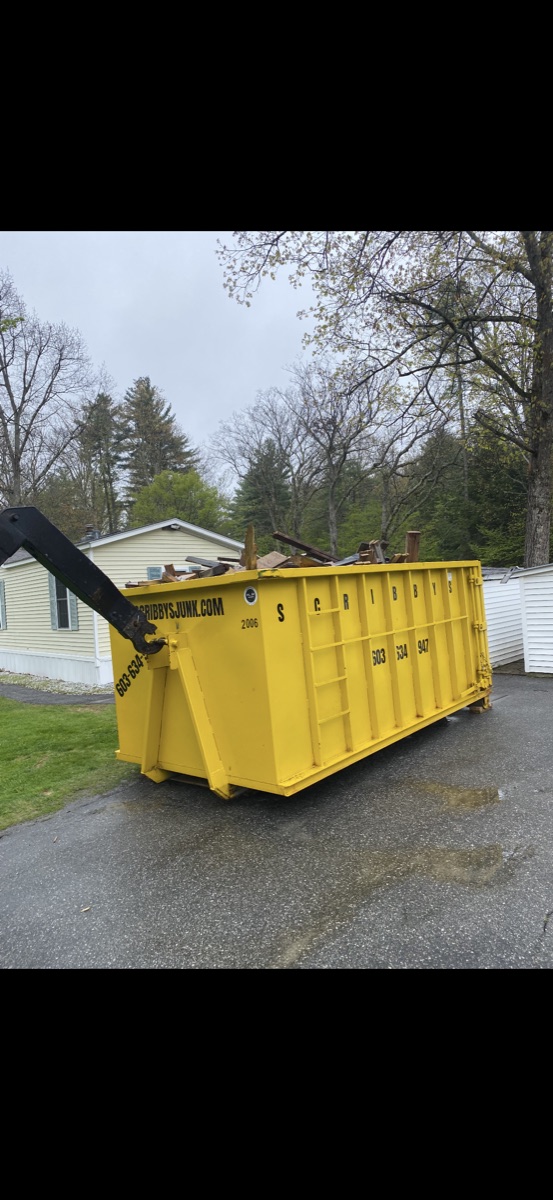
Thirty cubic yards is around nine heaped pickup loads, and it exists for jobs where a crew is loading continuously rather than a homeowner filling a container over a weekend. Framing lumber, gut demo out of a entire floor, siding off a full house, commercial fixture strip-outs.
The three ton allowance is the part contractors actually plan around. That is roughly twenty-four squares of single-layer three-tab, or a full house re-side, or the framing waste off a decent-sized addition. It is still not the size for concrete, brick, or dirt: those hit the weight ceiling at a fraction of the volume, and a 10-yard is the correct and cheaper answer for clean fill.
The 30 is 18 feet long and stands six and a half feet at the wall. That extra half foot over the other sizes matters when you are throwing material in over the side rather than walking it up a ramp.
The 30 is the right container when the constraint is your crew's time rather than the driveway. It holds half again what the 20-yard does, which on a continuous-loading job is usually the difference between one container and a swap mid-week.
What it costs you is space. Eighteen feet of box plus the room a truck needs to set it down and pick it up is more than a lot of residential drives have, and at six and a half feet the walls are tall enough that you want to be loading from a tailgate or a ramp, not lifting over the side all day.
Book the 20 instead when the site is tight, when the material is dense enough that you will hit weight long before volume, or when the job is a single-day strip-out. Dense demolition, concrete, and clean fill all belong in a smaller container regardless of how much of it there is.
The 30 goes mostly to job sites rather than driveways, which puts the demand where the building is. New construction around Londonderry and Manchester, and the bigger renovation work out toward Concord. All 92 towns are on the run list out of Fremont.
The service area page lists all 92 towns. For 30-yard work, send the site address and the access route if there is one. Eighteen feet of box wants a confirmed approach, not a postcode.
A 30-yard holds roughly a gut renovation, an addition, a full estate cleanout, or new construction debris. It is the biggest box we run and the one contractors ask for by name. It needs serious driveway length, so placement is worth a conversation first. If you describe what you are clearing out we will tell you honestly whether the 30 is the right call or whether you want a different size.
The 30-yard takes about 18 by 8 feet of ground and stands 6.5 feet tall, and you want roughly ten feet of clearance beyond that so the truck can tilt the box off and back on. Watch for low branches and overhead wires on the approach. Send a photo of the spot and we will tell you before delivery day rather than after.
It depends on your address and how long you keep it. The booking system on the pricing page gives you an exact number for the 30-yard at your address in about a minute, with delivery, pickup, and the three tons allowance already inside it. Or call 603-634-9947 and we will quote it on the phone.
Three tons, and that allowance is included in the price rather than added on after. Anything past it is billed per ton. Heavy material fills the weight before it fills the box, so if you are loading shingles, plaster, brick, or wet drywall into the 30-yard, say so when you book and we will size the job for weight instead of volume.
Standard rental is seven days, but the 30 is the size where that is usually beside the point. Contractors book it against a site schedule and often want it on the ground for the length of a phase. Tell us the job timeline when you book and we will work out swap dates rather than default terms.
The 30-yard is the largest we run, so the question is usually whether you need it or whether a 20-yard will do. Full guts, additions, and new construction earn the 30. A single-floor renovation usually does not.
On a driveway, no. In practice the 30 is the size most likely to need one, because eighteen feet of box plus the truck room to set it down is more than a lot of residential drives have, and street placement is a town office decision. On a commercial site the property owner usually settles it instead.
All 92, though the 30 goes to job sites more than driveways, so the demand sits where the building is happening: Londonderry, Manchester, Concord and the renovation work around Hampstead and Plaistow. It runs out of the Fremont yard the same as the rest.
On a 30-yard job the answer is almost always the container, because the volume that justifies this size is more than a crew clears in a visit. The exception is a single-event strip-out where the material is already staged and you want it gone the same day. If a site cannot take an 18 foot box, ask about the 20-yard first.
Not certain the job needs a 30? Talk it through before you book and we will be straight with you.
Call 603-634-9947For ongoing projects we can plan deliveries and swaps around your phases. Call with the job address and the rough timeline.
603-634-9947 Text Us