For our purposes: drywall, framing lumber, sheathing, subfloor, flooring you're tearing out (hardwood, laminate, tile), old kitchen and bath cabinets, vanities, countertops, packaging from new materials, broken siding, insulation, doors, windows, baseboard, and trim. If it's coming out of a wall, going on top of one, or arriving in a shipping crate on a renovation jobsite, it's construction debris.
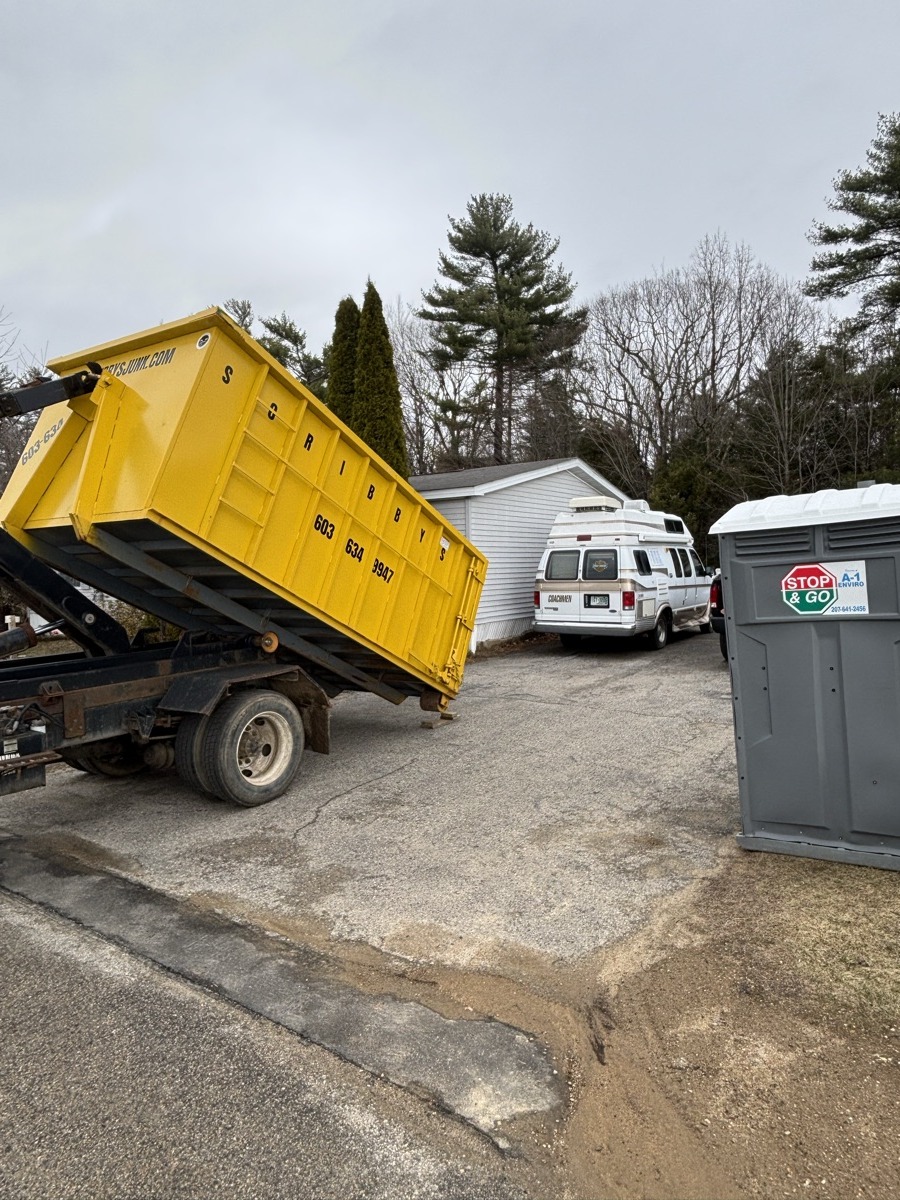
A bathroom remodel usually lives inside a 15-yard. A kitchen with cabinet removal usually wants a 20-yard. Full-floor renovations, multi-room work, or jobs that include demo generally run a 30-yard. If you're not sure, describe the job on the phone and we'll talk through the right size for what you're doing.
This is where construction debris gets people. Shingles, plaster, brick, wet drywall, tile with mortar attached, and any kind of masonry hit weight limits faster than you'd think. A 20-yard with shingles can be over allowance at one third full. Each can comes with a weight allowance, and overage gets billed by the ton. If your job's heavy on those materials, mention it on the call so the weight tier can be planned before delivery.
For ongoing renovations where one can won't be enough, swap-outs are an option: you fill it, we pull it, and drop a fresh one. If your job site has a deadline, tell us the dates when you book so the schedule can be planned around it.
Hazardous materials of any kind. Asbestos (suspected or confirmed) needs a licensed abatement company, not a roll-off. Large amounts of straight concrete, brick, or stone (small amounts mixed in are usually fine, but a full dumpster load gets too heavy for the truck to pick up). Old oil tanks, paint cans full of liquid paint, motor oil, and lead-painted lumber in suspicious quantities. If you're not sure, call before you load it in.
Two ways to get it gone, and they suit different jobs.
Searches for construction debris removal near me and construction junk removal near me usually mean one of two jobs, and they are priced differently. Worth knowing which one you have before you call.
Describe the job and we will tell you which is cheaper for your case. If the debris is already piled and the access is tight, the crew usually wins. If the work is still running, the container almost always does.
Yes. Swap-outs are how multi-week jobs run: you fill the can, we pull it and drop a fresh one. Mention the rough project timeline when you book so the swap dates can be planned around the work.
Shingles are fine in the dumpster but they're heavy. A 20-yard with shingles can hit the weight allowance at a third full. If you're doing a roof tear-off, mention it on the call so the weight tier matches the load.
Yes. This page isn't contractor-only. Homeowners taking on a kitchen, bath, or basement renovation themselves use the same construction dumpsters. Describe the job on the call and we'll suggest the size and weight tier.
Mixed renovation debris is standard. Drywall, framing, flooring, cabinets, packaging, general demo material in the same can is fine. The exception is pure loads of concrete, brick, or masonry, where the weight gets too heavy for the truck to pick up a full container.
Small amounts of concrete mixed in with regular construction debris is usually fine. A full load of broken slab, footings, or driveway is too heavy for the truck to pick up, so the answer there is to keep the amount smaller, not fill a full container.
All 92 of them. We run construction debris removal across southern New Hampshire and northern Massachusetts out of our yard in Fremont, from the Seacoast over to the Merrimack Valley. Manchester, Nashua, Concord, Portsmouth, Salem, Hudson, Derry and Londonderry all have pages of their own, and Somersworth is covered on the same runs without one. The service area page lists every town we cover. Give us the street address and we will confirm the run.
For construction debris removal, the dumpster is usually the better value. Debris from these jobs accumulates over days rather than all at once, so having the container on site beats booking a crew twice. If the pile is already finished and you just want it gone, junk removal handles it in one visit.
There is no flat rate for construction debris removal, because volume and material both move the number. If you want a dumpster, the booking system on the pricing page prices it against your actual address, delivery and pickup and weight allowance included. If you want the crew, send a couple of photos of the construction debris removal and we will quote it. Either way, 603-634-9947 gets you a person.
Not sure whether construction debris removal is what your job needs? One call sorts it, and we will say so if a dumpster is the cheaper route.
Call 603-634-9947Tell us the job (kitchen, bath, entire house) and the rough material mix. We'll size it and price it.
603-634-9947 Text Us