
The 20 is the workhorse. It's two feet longer than the 10 and 15, same height as the 15. It still fits on the average two-car driveway with room to walk around, and it gives you enough volume that the average homeowner doesn't have to think about packing it like a Tetris game.
We will place boards under the dumpster wheels upon request.
A single layer of asphalt shingles on a 2,000 sq ft roof is roughly 4,500 to 5,000 lbs of waste, about 2.5 tons. That bumps you over the 20's 2-ton allowance, so if you're tearing off a larger roof or two layers, ask about the 30 or expect to pay overage. We'll talk it through on the phone before delivery.
Heavy demolition with concrete, brick, or full tear-downs. The volume is fine, but the weight gets you. For anything heavy or contractor-scale, look at the 30.
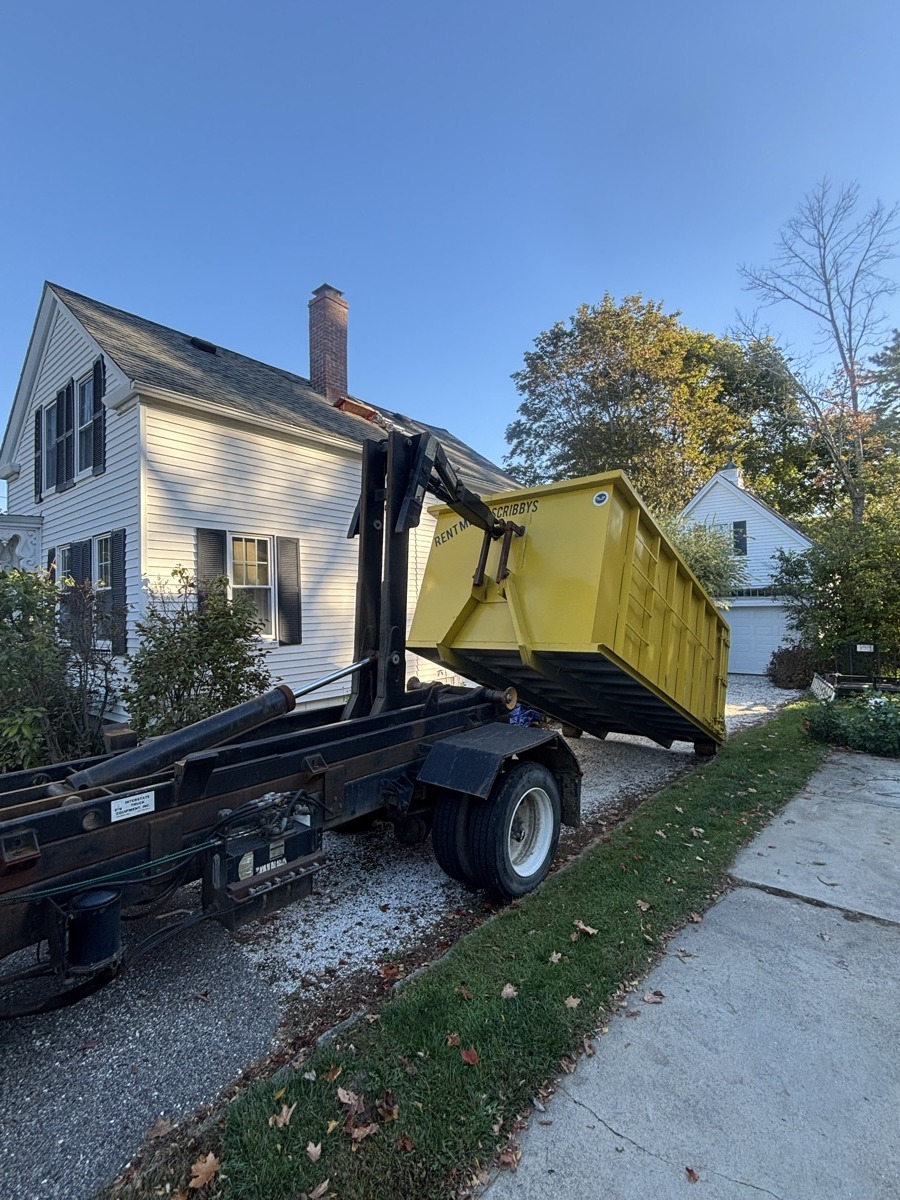
Twenty cubic yards is roughly six heaped pickup loads, and it is the first size that swallows a whole house. A three-bedroom cleanout with furniture, mattresses, boxes, and the contents of the basement generally lands inside a 20 with room left over.
For remodels it covers a kitchen and a bathroom together, or a full floor of carpet and subfloor, or a two-car garage taken back to bare walls. On roofing, the two ton allowance is about sixteen squares of single-layer three-tab, which reaches most colonials in Rockingham County.
Where the 20 earns its keep is mixed loads. Cleanouts rarely sort neatly into heavy or bulky, and this size gives you enough of both that you are not doing arithmetic in the driveway.
The 20 is the largest container most residential driveways take comfortably. At 14 feet it still leaves room for a car on a standard two-car drive. The 30-yard is 18 feet, half a foot taller at the wall, and generally wants the driveway to itself.
The split is usually who is loading. A homeowner filling a container across a week almost never fills a 30, and pays for capacity that stays empty. A crew loading continuously fills a 20 by the second day and then waits on a swap, which costs more in downtime than the bigger box would have cost outright.
If you are between them on a residential job, the 20 is nearly always the right call. If you are a contractor reading this, the question is not volume, it is how many days your crew is on site. The 30-yard page covers swap timing.
Whole-house cleanouts drive most 20-yard bookings, so the demand follows the larger towns and the estate work in them. Every town on our list gets the 20 out of Fremont; the ones below are simply where it comes up most.
Every town we cover is on the service area page. Because the 20 needs 14 feet plus truck room, it is worth giving us the address rather than the town so we can flag a tight drive before delivery day.
A 20-yard holds roughly a full-house cleanout, a roof tear-off, or a whole-floor renovation. This is the one most homeowners land on. It still fits a normal two-car driveway with room to walk around it. If you describe what you are clearing out we will tell you honestly whether the 20 is the right call or whether you want a different size.
The 20-yard takes about 14 by 8 feet of ground and stands 6 feet tall, and you want roughly ten feet of clearance beyond that so the truck can tilt the box off and back on. Watch for low branches and overhead wires on the approach. Send a photo of the spot and we will tell you before delivery day rather than after.
It depends on your address and how long you keep it. The booking system on the pricing page gives you a real number for the 20-yard at your address in about a minute, with delivery, pickup, and the two tons allowance already inside it. Or call 603-634-9947 and we will quote it on the phone.
Two tons, and that allowance is included in the price rather than added on after. Anything past it is billed per ton. Heavy material fills the weight before it fills the box, so if you are loading shingles, plaster, brick, or wet drywall into the 20-yard, say so when you book and we will size the job for weight instead of volume.
Standard rental is seven days. Whole-house cleanouts are the common 20-yard job and they run on family schedules rather than trade schedules, so this is the size people most often ask to keep longer. Say so at booking and we will price it as an extended rental up front instead of after the fact.
If you are emptying a whole house, yes. The 20 is the smallest box that takes a three-bedroom cleanout in one go, and cleanouts are where a second haul hurts most because the crew or the family is already there. For a single-room remodel it is more container than the job needs, and the 15-yard is the cheaper right answer.
Not for driveway placement, though at 14 feet the 20 is the first size that starts running out of room on a single-car drive. If the back of the box would sit over the sidewalk or into the road, that is a town office question, and worth asking before delivery day rather than on it.
All 92. Demand for the 20 follows the bigger towns and the estate work in them, so Manchester, Nashua, Derry and Portsmouth come up most, but it goes anywhere on the run list out of Fremont. Street address rather than town name when you book, please.
Most 20-yard bookings are whole-house cleanouts, and that is the job where the two options genuinely compete. Take the container if you have help and time, since you are paying for the box rather than the labour. Take the crew if the house needs emptying before a closing or a listing and nobody is available to carry it out.
Somewhere between the 20 and the 30? Give us the scope and we will pick it.
Call 603-634-9947Most projects in this size range get scheduled a few days ahead. Call us with the address and the rough scope and we'll get a slot picked.
603-634-9947 Text Us