If you're a contractor renting a dumpster for a job, the sizing question gets answered fast once you've done it a few times. The default for most renovation work is the 20-yard. The 30-yard is for the bigger or messier jobs. The 15-yard fills a niche for smaller projects.
Here's how the pros actually pick.
The 20-yard is the default
The 20-yard is the most common pick for contractor work. It's a 14' x 8' x 6' container with a 2-ton weight allowance, and the math just works out for most reno jobs.
The reasons it dominates:
- Big enough for a single-bath gut, a kitchen reno, or a partial-house remodel
- Walk-in door at the back, so you can wheelbarrow drywall and lumber straight in
- Fits in most residential driveways (not always, but usually)
- The 2-ton allowance covers most mixed renovation debris before you hit overage
- Cost per cubic yard works out better than the 15-yard once you account for delivery and pickup being roughly fixed
For most single-bath gut jobs, the standard 7-day rental window covers the demo and the rough trades. One container handles the whole project.
When the 30-yard makes sense
The 30-yard is 18' x 8' x 6.5' with a 3-ton allowance, and it's the right pick for:
- Full-house gut renovations
- Multi-room interior demo (kitchen + multiple baths + flooring)
- Whole-house roof tear-offs on larger homes
- New construction debris stages
- Light commercial cleanouts
The 30 takes more driveway space than the 20. Some jobs that would benefit from the bigger container can't fit it on the lot, which is why the 20 still wins on access-constrained sites.
If you're sizing between the 20 and the 30 and the driveway can take the 30, the bigger box is usually the cheaper move. Avoiding a swap-out saves more than the size upgrade costs.
When the 15-yard is the right call
The 15-yard is the same physical footprint as the 10-yard tier, with a 1.5-ton allowance. The 15 is the right pick for:
- Small renovations (a single bath, a small kitchen update, flooring on one floor)
- Light demo with no heavy materials
- Punch-list cleanouts on a completed job
- Tight driveways where the 20 won't fit
Most contractors who book the 15 are working in tight access or doing a smaller scope. It's not a default size for pros, but it has its uses.
Weight is what bites
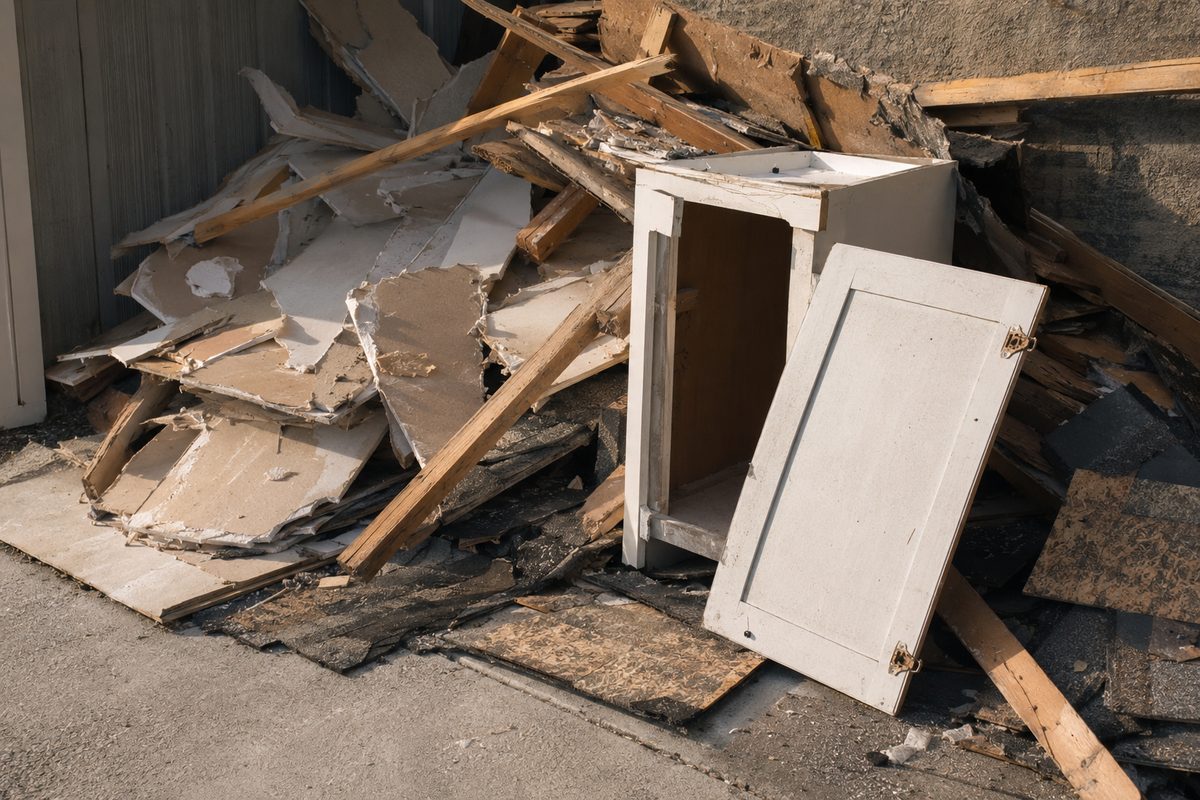
The thing that turns a "right size" into a "wrong size" is usually weight, not volume. A 20-yard packed with light renovation debris (cabinets, drywall scraps, flooring) is well under 2 tons even when it's stacked high. A 20-yard with old roofing shingles, tile and mortar, plaster, or concrete can be at the weight ceiling at a third full.
The materials that eat weight allowance fast:
- Asphalt shingles (especially multi-layer tear-offs)
- Plaster and lath from older homes
- Tile with mortar attached
- Concrete, brick, and other masonry
- Wet drywall
- Dirt, sod, gravel, stone
If your debris stream is mostly the above, size up. A 30 with shingles is usually right where a 20 would be over weight at half full.
What about a swap-out vs going bigger
For jobs that run more than a week or two, the question becomes: rent one bigger container, or run multiple smaller ones with swap-outs?
The rough guide:
- One container can stay on site as long as your insurance and the property owner allow. Most residential jobs don't have a hard cap, but check.
- A swap-out adds a delivery and pickup charge. Worth it if the container is going to sit half-full for a week.
Most residential contractors book one container at the right size and live with it.
The booking call
For a contractor booking, the conversation usually covers:
- Project type (full reno, partial gut, tear-off, demo, etc.)
- Debris mix (light renovation, heavy demo, mixed)
- Site access (driveway dimensions, overhead clearance)
- Timing (drop date, pickup window, swap-outs)
Most people text or call to book. Either works.
Call 603-634-9947 for sizing questions or to set up a job.