Pure organic yard waste (brush, branches, leaves, lawn clippings, sod, stumps, firewood) isn't something we generally take in our dumpsters. Your town's transfer station has a brush pile that's usually free or cheap, and that's the right destination for clean yard material.
We're a fit when the yard project also produces non-yard material: old fence posts coming out, deck boards from a tear-down, shed walls from a demo, pressure-treated lumber, anything with hardware or paint on it. Mixed loads like that get classified as construction debris and we'll take them.
If 90% of your pile is brush from clearing the property and 10% is old fence posts, two trips usually makes more sense than one. The brush is free at the transfer station; the demo material comes with us.
If most of the pile is demo material (deck tear-down, shed demolition, fence replacement) with some brush from clearing around it, that's one job and we'll quote it.
Whatever's in the load, weight matters more than volume for outdoor projects. Wet sod runs about a thousand pounds per pickup truck bed. Dirt and stone are heavier still. Pressure-treated lumber is dense. Our dumpsters and truckloads come with weight allowances, and going over carries an overage fee. Describe what's in the pile when you call.
Loose dirt, gravel, and stone don't go in our dumpsters. Asbestos doesn't. Liquid paint, motor oil, and other hazardous materials don't. Pure pressure-treated lumber can go in a construction debris dumpster.
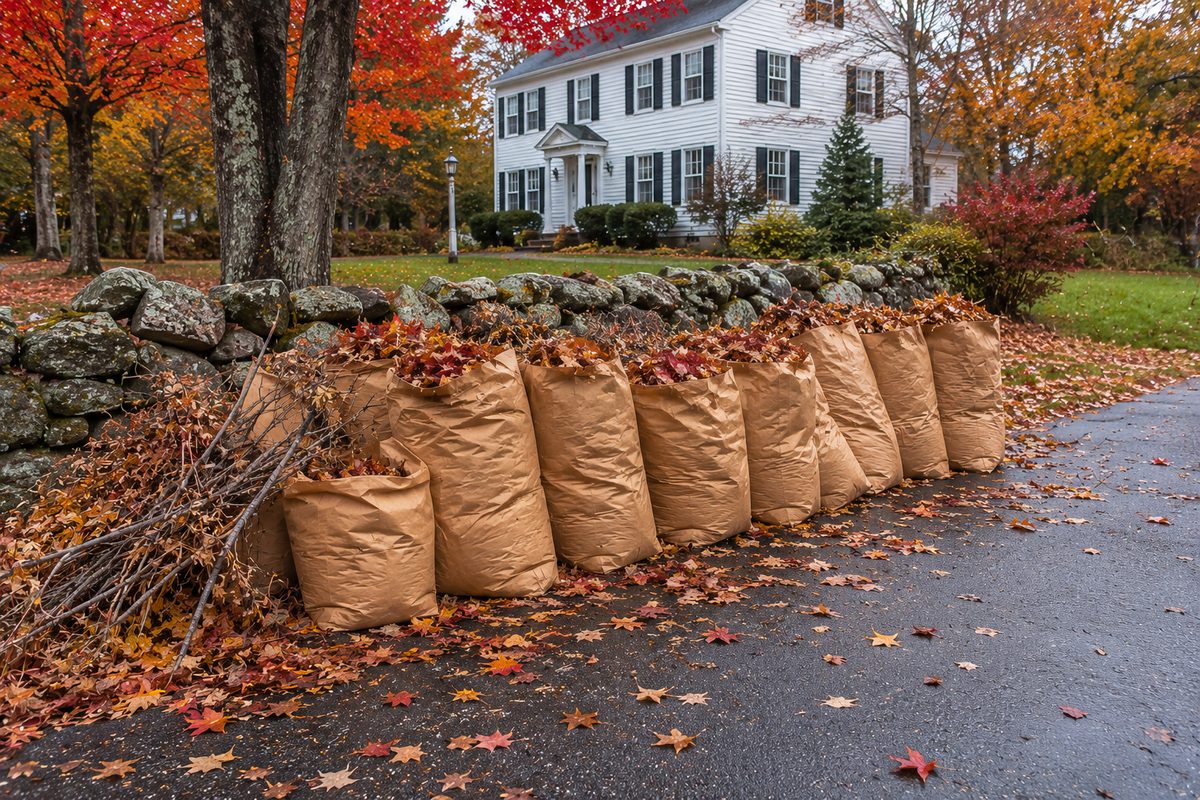
Generally no. Your town's transfer station has a brush pile (usually free or cheap) that's the right destination for pure organic yard waste. We come in when there's lumber, fence material, or shed/deck debris mixed in.
Yes. Old deck material, fence boards, shed walls, and similar lumber fall under construction debris and we take it. Brush mixed in from the same project is fine.
No. Loose dirt, gravel, stone, and sod have their own disposal channels. Not something we take.
No. Pure organic wood isn't something we take. Stumps go to your town's transfer station or a tree service.
It can, but ground conditions matter. Soft or wet lawn under a loaded roll-off can leave ruts. A flat, firm driveway is the safer pick when one's available. Mention the placement options when you book.
All 92 of them. We run yard waste removal across southern New Hampshire and northern Massachusetts out of our yard in Fremont, from the Seacoast over to the Merrimack Valley. Manchester, Nashua, Concord, Portsmouth, Londonderry, Goffstown, Raymond, and Rochester are all on the regular route. The service area page lists every town we cover. Give us the street address and we will confirm the run.
Most yard waste removal jobs run better on a roll-off dumpster, because the debris comes off in waves and you want somewhere to put it as you go. Where a crew makes more sense is a single finished pile, and that is full-service junk removal. Describe the yard waste removal job and we will point you at whichever is cheaper.
What yard waste removal costs depends on volume and what is in the load. For dumpster work, the booking system on the pricing page gives you an exact number for your address in about a minute, with delivery, pickup, and the weight allowance already inside it. For crew work we quote the yard waste removal from a description or a few photos. Call 603-634-9947 and we will work it out on the phone.
Not sure whether yard waste removal is what your job needs? One call sorts it, and we will say so if a dumpster is the cheaper route.
Call 603-634-9947Tell us what's in the pile and where it is on the property. We'll let you know if we're the right fit or point you toward the town transfer station.
603-634-9947 Text Us