Most people don't rent a dumpster between December and March, but plenty of projects do happen in those months. Winter renovations, basement floods, estate cleanouts that can't wait for spring, contractors doing interior work. Winter dumpster rentals are workable, but the logistics shift in a few specific ways. Here's what to know.
What changes in winter
The main differences from a spring or summer rental:
- Snow accumulation around the container. Plowing has to work around it. Same for the homeowner shoveling out.
- Frozen driveway surface. Salt and ice melt won't damage the asphalt under the dumpster, but ice can change traction for the delivery truck.
- Daylight hours. Shorter days mean less working light, especially in the afternoon.
- Loading conditions. A frozen pile of debris is heavier and harder to break apart than the same pile in summer.
- Yard placement is mostly off the table. Lawn under snow can't be evaluated, and frozen ground under heavy snow plus a loaded dumpster sometimes leaves real damage when spring arrives.
The work still happens. The booking and placement conversation just covers a few extra topics.
Delivery in snow
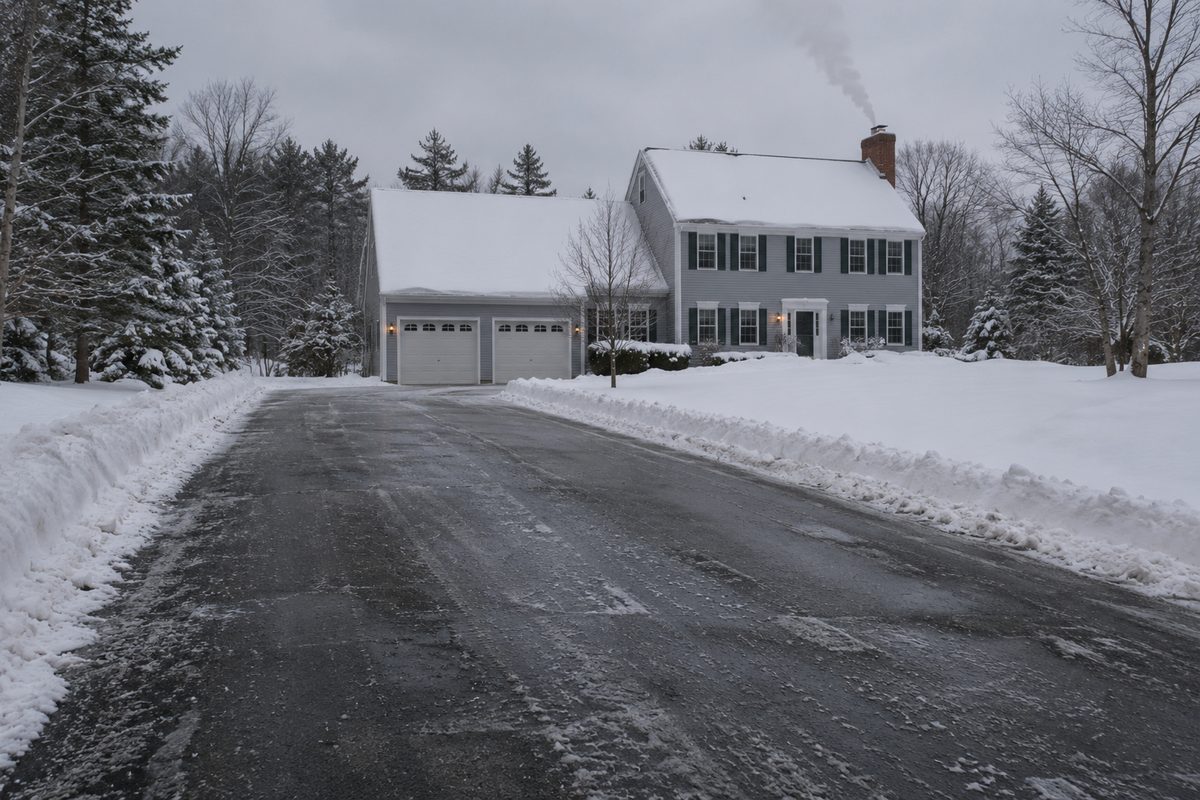
The delivery truck can handle most NH winter conditions. The driver does the same job in February that they do in July. A few things help:
- A plowed driveway at delivery time. Don't wait until the truck shows up to clear it.
- Sand or ice melt on the driveway if it's icy. Helps the truck's traction.
- A clear path from the street to the placement spot.
If your driveway hasn't been plowed because of timing or because the snowblower broke down, mention it on the call. We can sometimes reschedule for after the next plow run. We don't try to deliver onto an unplowed driveway because the truck weight and the snow combine badly.
Where the dumpster sits
Winter placement options are narrower than summer:
- Plowed driveway. Standard, fine. Same considerations as any other season.
- Lawn under snow. Generally a bad idea. The frozen ground might support the container, but spring thaw under a still-loaded dumpster can sink the wheels into the lawn.
- Snowbank-adjacent. Common in tight driveways. The snowbank built up by the plow takes driveway width. Measure before booking.
- Street placement. Less common in winter because of snow ordinances in some towns. Some NH towns prohibit street obstructions during snow season specifically because of plowing.
For winter projects, we usually steer toward driveway placements with snow management agreed up front.
Plowing around the dumpster
The container is going to sit on your driveway for a week or more. The plow service has to work around it. A few things that help:
- Tell your plow service the dumpster is coming
- The plow will leave a snowbank between the street and the container
- You'll need to shovel out from the container to maintain access for loading
- Pickup day, the driveway needs to be cleared around the dumpster the same way as delivery day
This isn't really our work, but it affects the timing. If your plow service comes overnight after a storm, schedule the dumpster pickup for a day or two after the storm so the driveway is back to normal first.
Loading in cold
Loading a dumpster in 20-degree weather is harder than loading it in 60-degree weather. A few items that change in cold:
- Plastic gets brittle. Old plastic furniture and bins crack easier.
- Frozen drywall and plaster are denser per cubic foot.
- Wet materials freeze together into single blocks. A wet rug in a basement turns into a single solid lump after a cold night.
- Hands get cold. Loading takes longer.
Winter loading is usually slower-paced than summer loading. The cold and the daylight both shift how the project runs.
Materials that need extra care in winter
A few specific items behave differently in cold:
- Liquid items. Anything liquid in the load freezes. Wet cardboard becomes ice-paper.
- Refrigerators and freezers. Still going through the same per-item disposal fee year-round. See our appliance removal page.
- Yard waste. Brush and branches from winter storm cleanup are heavier than summer brush because they hold ice and snow weight.
Winter projects we see most often
Common winter projects include:
- Basement floods (from frozen pipes that burst)
- Interior renovations (kitchens, baths, finished basements)
- Roof tear-offs (occasionally, for emergency work)
- Estate cleanouts (deaths in winter, family arriving for the holidays)
Most are workable with standard sizing patterns. The 15 and 20-yard sizes are the most common winter rentals because they fit in plowed-driveway space.
A note on roof tear-offs in winter
Roofing in winter is harder and slower, but it happens, especially for emergency repairs after ice damage or storm damage. The dumpster sizing math is the same as summer: shingles are heavy. See our roof tear-off post for the weight math.
The placement gets tighter because the dumpster has to be close to the work side of the house, but the snowbank from plowing is usually in that same area.
What doesn't change
A lot of the rental fundamentals are the same year-round:
- The four dumpster sizes we run
- The weight allowances and overage structure
- The accepted materials list
- The booking process
- Pickup and drop-off included in the rental
Winter just adds the snow and ice variables on top.
The booking call
For a winter dumpster rental, the questions are:
- Project type and rough scope
- Driveway plow situation (who plows, how often)
- Whether the project is urgent or weather-flexible
- Standard size and access questions
Text the address to 603-634-9947 with a photo of the placement spot in current conditions (snow piles and all). Helps us scope accurately.
Call 603-634-9947 when you're ready to schedule.