Almost every dumpster rental call includes some version of the placement question. "Can it go on the lawn?" "Will it mess up my driveway?" "Where should I put it?" The honest answer is that it depends on the lot, the size of the dumpster, and how long the rental runs. Most of the time the driveway is the right pick, but not always.
Here's the tradeoff.
The driveway as default
For most projects, the driveway is the right answer. Reasons:
- Paved or concrete surfaces handle the weight without leaving marks
- The truck has an easier time aligning the placement
- Loading is easier from a flat, hard surface
- No lawn damage to repair after pickup
If your driveway is long enough to spare a 12 to 18 foot section, that's usually where the dumpster goes.
The questions to ask about the driveway:
- Is there room for the dumpster plus normal car parking? (Most driveways yes, some no.)
- Is the surface in good shape? (Cracks under load can spread.)
- Is the slope reasonable? (Steep grades push the dumpster's contents toward one end.)
- Is the surface sealcoated or paver? (Worth taking some care with.)
When the lawn makes sense
A few scenarios where lawn placement is the better option:
- The driveway is too short. Common with attached two-car garages on small lots.
- The driveway is shared. Putting a dumpster in front of the neighbor's car space is a problem.
- The driveway is paver or stamped concrete. Sensitive surface. Lawn might be cheaper to repair than the pavers.
- The lawn already needs reseeding. If you're going to reseed anyway, the timing might line up.
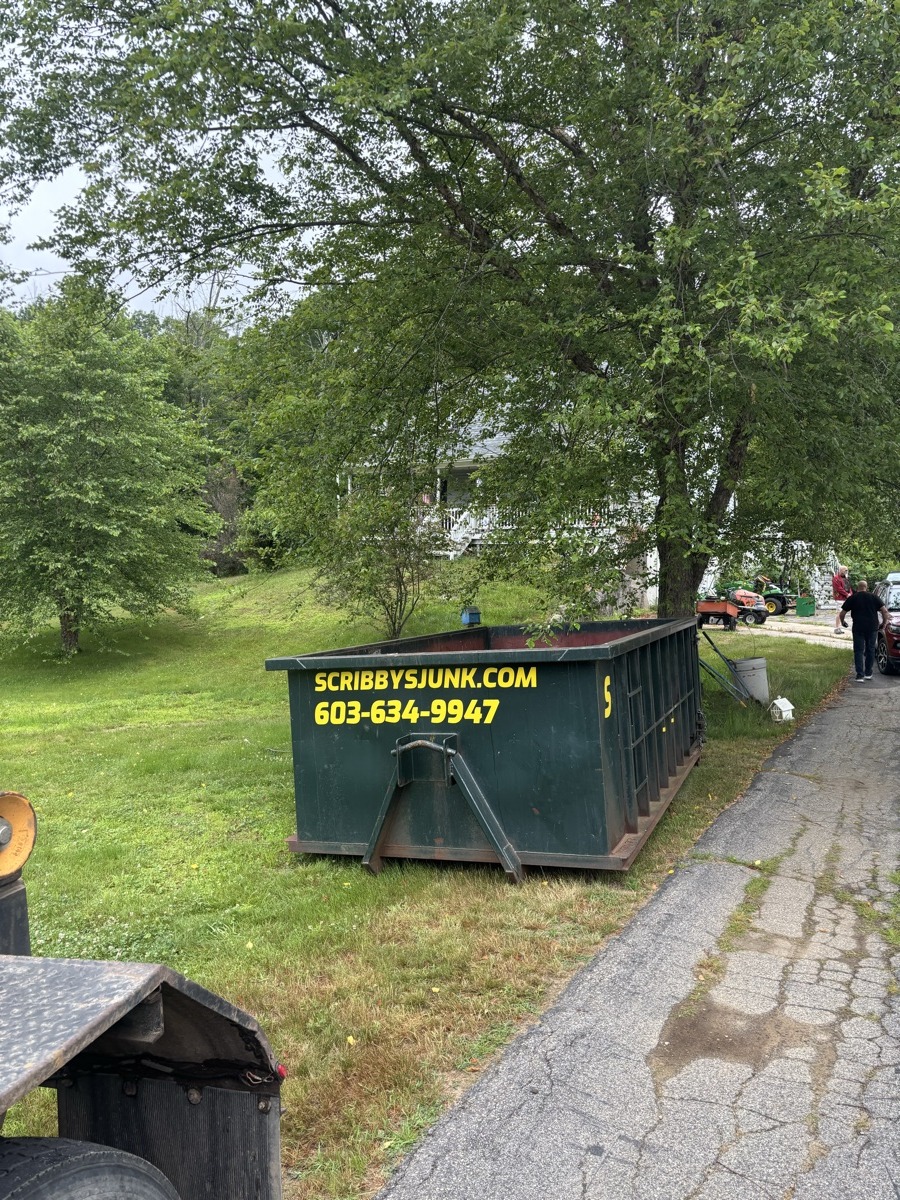
When the lawn is the right pick, the expectation has to be set up front: the lawn will have wheel ruts and yellow grass under the dumpster footprint. Recovery takes weeks of regrowth, sometimes a season.
What about boards under the wheels
A common question, especially on nice driveways. Putting wooden boards under the front edge of the dumpster (the side with the wheels) spreads the weight and reduces marks on sealcoated or paver surfaces.
We'll put boards under the wheels if it's a nice driveway or if you ask. Just mention it on the booking call so we know to bring them.
A few notes:
- They go on the side of the dumpster that has wheels, where the load concentrates
- The wood plank at the back of the container is less concerning because the weight spreads over a longer area there
- Boards aren't strictly necessary on most asphalt driveways
Worth flagging if you have a nice driveway you want to protect. Worth skipping if your driveway is older asphalt where a mark wouldn't matter.
What about pavers and stamped concrete
These surfaces are the pickiest of any common driveway type. The container can be set on them, but the weight is concentrated under the wheels, and pavers under that weight can shift or crack over a week.
For paver driveways:
- Mention it on the booking call so we know to bring boards
- Shorter rental periods reduce the chance of marks
- Sometimes lawn placement is actually the safer call
If your driveway is high-end pavers, talk through the options before delivery.
Sealcoated driveways
Fresh sealcoat (within a month or two) can mark from a dumpster. The black coating is soft when new. After a few months it cures and is much more durable.
If your driveway was recently sealcoated:
- Wait if you can. A two-month-old sealcoat is much more resilient than a two-week-old one.
- If you can't wait, mention it on the call. Boards under the wheels help.
- Some marking might happen anyway. Worth budgeting for a touch-up.
Sloped driveways
Driveways with significant slope are workable but have a few specific issues:
- Loaded contents shift toward the downhill end (uneven weight)
- The dumpster's wheels need to be on the downhill side typically (not always)
- The truck setting the container down needs to compensate for the grade
- The rear plank can dig into the asphalt at the bottom edge
For most residential slopes (a few percent grade), this is fine. For steeper driveways (8% and up), worth talking through on the booking call.
How long does lawn recovery take
Expect wheel ruts and yellow grass after the dumpster comes off the lawn. Recovery takes weeks, sometimes longer.
Lawn placement during dry weather recovers faster than during wet. Spring mud season is the worst time to put a dumpster on grass. Late summer is the best.
What if my project is just a few days
Short rentals (a few days) have less impact on either surface. Lawn placement for two or three days does much less damage than for two weeks. If your project is fast, the placement question is less consequential.
The booking call
For placement questions, three things help:
- Photo of the proposed spot
- Surface description (asphalt, paver, stamped, lawn, gravel)
- Rough rental duration
Text a photo to 603-634-9947 with the address. Call 603-634-9947 if you want to talk through the options before booking. For details on what we offer, see our dumpsters page and the FAQ.