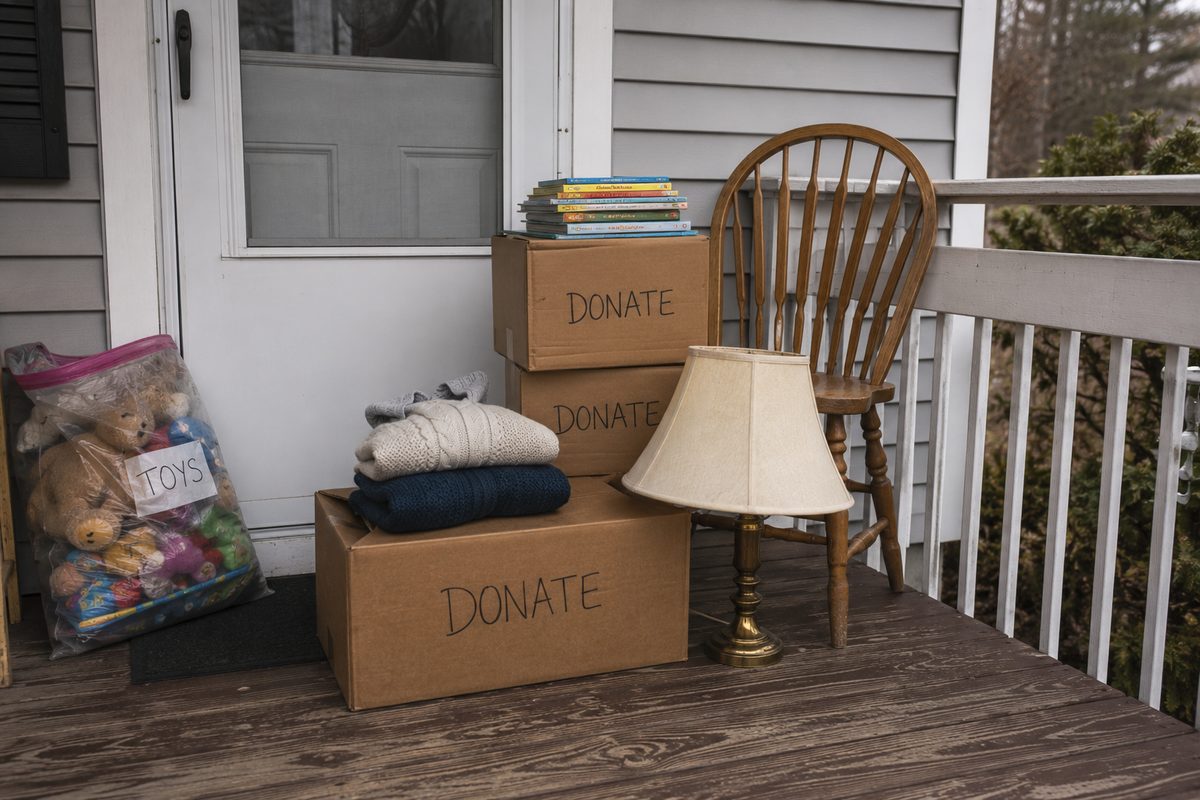
Most cleanouts have at least a few items that don't really need to be hauled. They're in decent shape, somebody could use them, and the right destination is a donation center, not the transfer station. The question is how to handle the donation pile without slowing the rest of the cleanout down.
Here's the practical answer.
What's worth donating
The categories that move most easily through donation centers:
- Furniture in good condition. Couches, chairs, dressers, tables, beds (frames yes, mattresses usually no).
- Working appliances. Refrigerators and other major appliances if they're under 10 years old and verifiably working.
- Household goods. Kitchenware, dishes, glassware, small appliances, lamps, decor.
- Tools and equipment. Yard tools, hand tools, power tools, exercise equipment.
- Books and media. Specific organizations take these but most generic donation centers are picky.
- Clothing in season. Cleaned, folded, current.
If an item passes the "would I take this if a neighbor offered it" test, it's probably worth donating.
What's not worth donating
Categories that donation centers typically won't accept (or will accept and then trash):
- Mattresses (state health rules in most of New England)
- Box springs (depends on the center)
- Older appliances (over 10 years, especially with cosmetic damage)
- Furniture with stains, tears, or visible damage
- Particle-board or laminate furniture (sometimes accepted, often not)
- Anything that smells (pet odors, smoke, mildew)
- Cribs and infant safety gear (recall liability rules)
- Tube TVs (almost no one takes these anymore)
- Mid-2000s electronics generally
If you wouldn't pay for it at the store, the donation center probably won't accept it either.
How donation fits into a cleanout
The cleanest workflow is for the customer to handle the donation pile separately from the cleanout. Here's why.
A cleanout works fastest when the scope is "load and haul." Once we start making donate-vs-haul decisions item by item, the cleanout slows down. The math usually doesn't favor the slow approach, because the time spent sorting often costs more than the items are worth.
Two ways to handle the donation pile:
Option 1: Donate before the cleanout. Pull the donate-able stuff aside in the days leading up to the cleanout. Drop it at a local charity yourself, or schedule a charity pickup. By the time we arrive, the donation pile is gone. We haul the rest.
Option 2: Donate after the cleanout. Keep the donate-able pile separate during the cleanout (in the garage, say). After we leave, you handle the donation drop on your own schedule.
Both work. Option 1 is cleaner because by the time we arrive, you're not making decisions on the fly.
What if you want us to help
Sometimes the donate-able pile is too big to handle yourself, or the timing doesn't work. We can load the donate-able stuff onto the truck along with the rest, but the destination is up to the load. Sometimes we can drop a nice piece at a local charity on the way back if it's on the route. Sometimes things go to the dump because the donation center isn't accepting, isn't on the route, or isn't open.
If donation is important to you, the surest way to make sure things actually get donated is to handle the drop yourself.
What about things with resale value
A separate question: stuff that's actually worth selling, not donating. Antiques, certain furniture, instruments, specific tools, items in like-new condition.
This is outside what we do. The cleanest approach: pull those items aside before the cleanout and handle the sale separately. Estate sale companies, online marketplaces, and consignment shops all work depending on what's being sold.
For most estates, the "worth selling" pile is much smaller than the family expects. The bulk of estate contents has sentimental value but not market value.
The estate cleanout context
Donation comes up most often during estate cleanouts. A long-occupied home has decades of accumulated household items, and most of it is in decent shape. The family often wants the still-useful stuff to go somewhere it'll be used.
For estate cleanouts, the workflow we suggest:
- Family identifies anything sentimental and pulls it out
- Family identifies anything worth selling separately
- Family identifies the donate-able stuff and handles those drops in the days before the cleanout
- We come and haul the rest
This is the cleanest sequence. It also gets the highest portion of usable items into donation channels.
When the donation pile is overwhelming
For full-house cleanouts where the donation pile is genuinely overwhelming, some charity organizations offer pickup service for furniture and large items. Worth calling around before the cleanout to see what's available in your area.
The catch: donation pickups often have a 1-2 week lead time. If your cleanout schedule is tight, the donation pickup might not align.
The booking call
For a cleanout where donation matters:
- Identify what's going to donation before the cleanout
- Tell us about the cleanout scope (everything still going after donation is sorted)
- Address and timing
Call 603-634-9947 to schedule. For more on full cleanouts, see our house cleanouts page.