
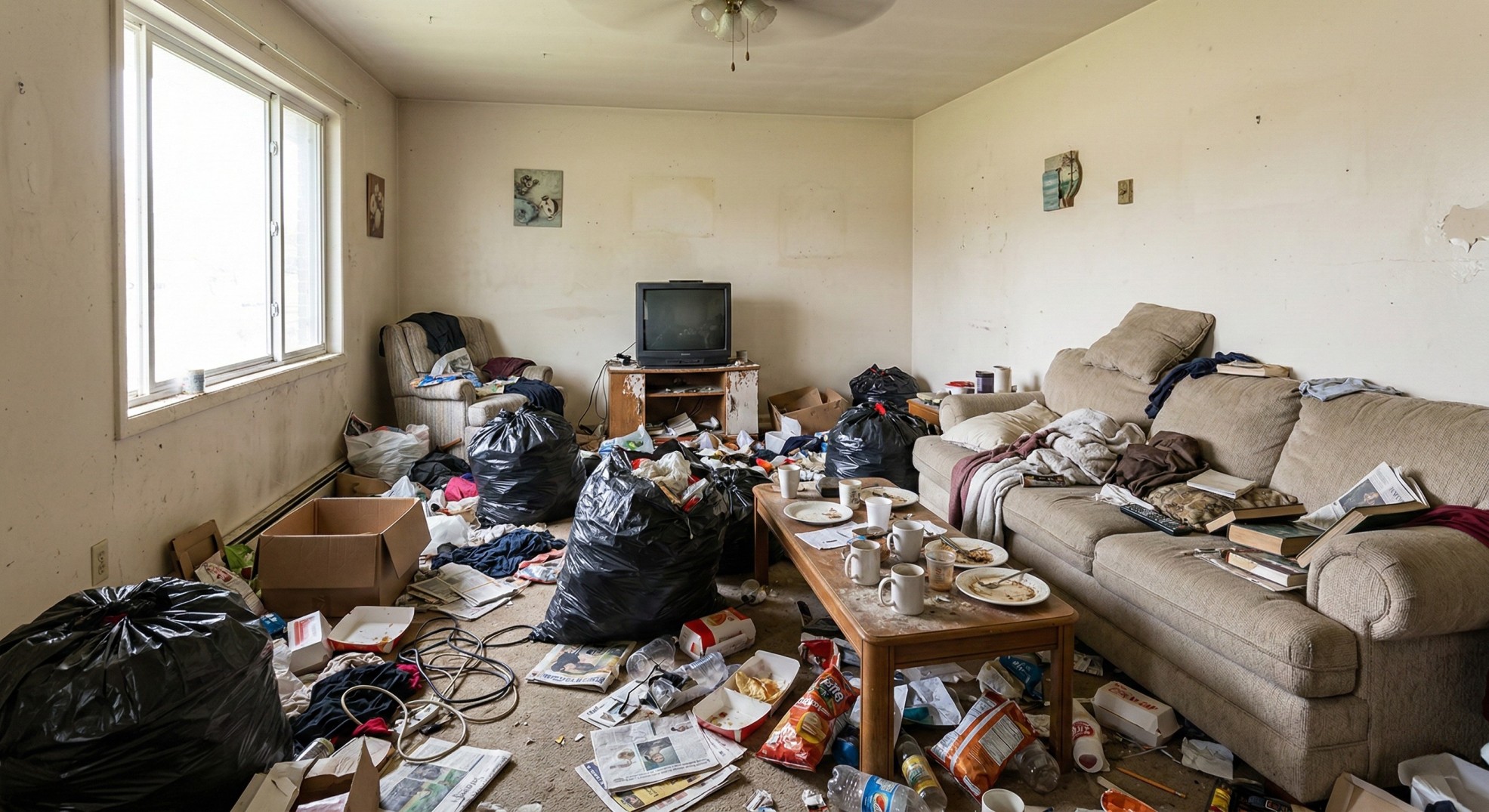
Walking into a hoarded home is paralyzing. You don’t know where to look, let alone where to begin. Whether you are trying to help an aging parent, supporting a struggling loved one, or taking the brave first steps to reclaim your own living space, the sheer volume of items can make the situation feel completely hopeless.
At Scribbys Junk Removal, we have walked alongside many families in Southern New Hampshire facing this exact crisis. We know that a hoarding situation is entirely different from a standard spring cleaning or a weekend garage purge. It carries a heavy emotional weight. It requires patience, strategy, and above all, absolute zero judgment.
If you are standing at the threshold of an overwhelming property, taking a deep breath and formulating a plan is your best tool. Here is our guide on where to start with compassionate hoarding cleanouts in Southern NH, focusing on safety, respect, and tangible progress.
Understanding the Reality of Hoarding
Before a single trash bag is opened, it is crucial to understand what you are dealing with. Hoarding is not a moral failing, nor is it simply a case of being “messy.” It is a recognized psychological condition tied to severe anxiety, trauma, and emotional attachment to physical objects.
When you approach a cleanout with the mindset of “let’s just throw all this trash away,” you will almost certainly be met with intense resistance and panic. The goal isn’t just to clear the house; it is to create a safe, livable environment while respecting the individual’s dignity. Empathy is your strongest asset.
Step 1: Establish Trust and Communicate Openly
You cannot force a hoarding cleanout over a single weekend against the homeowner’s will. The process must begin with open, honest communication.
Focus on Safety, Not the “Junk”: Frame the conversation around their well-being. Instead of saying, “We need to throw out these old newspapers,” try saying, “I want to make sure the EMTs can get a stretcher through the hallway if you ever need them.”
Give Them Control: Allow the individual to make decisions about their belongings. When they feel they have a say in what stays and what goes, they are far more likely to cooperate with the broader cleanout effort.
Set Realistic Goals: Agree on small, manageable milestones. A great starting point is clearing a single pathway from the bedroom to the bathroom, or making the kitchen stove safe to use.
Step 2: Focus on Immediate Safety Hazards
When dealing with a massive accumulation of items, the structural and physical hazards are very real. Southern New Hampshire homes, especially those with older basements and attics, are prone to specific dangers when overly cluttered.
Before worrying about the aesthetic of the home, identify and mitigate these severe risks:
Blocked Exits and Pathways: Every door and window must be accessible in case of a fire.
Fire Hazards: Piles of combustible materials (clothing, cardboard, magazines) resting against radiators, baseboard heaters, or aging electrical outlets are ticking time bombs.
Biohazards and Pests: Over time, buried food waste and pet accidents can lead to severe mold growth, rodent infestations, and poor indoor air quality.
Structural Strain: Rooms packed to the ceiling with heavy items can compromise the structural integrity of the floor joists.
To tackle the initial wave of general debris safely, relying on comprehensive professional junk removal ensures that heavy, hazardous, or bulky materials are removed quickly and legally, instantly improving the safety of the environment.
Step 3: The Three-Box Sorting Method
Once the immediate safety hazards are cleared, the emotional labor begins. To avoid decision fatigue, bring in three distinct colored bins or designated staging areas for sorting:
Keep: These are items that are essential for daily living or hold undeniable, significant sentimental value.
Donate/Sell: Items that are in good condition but no longer needed. Knowing that clothing or unused furniture will help someone else in the local community often makes it easier for the individual to let them go.
Discard: Broken items, expired food, soiled clothing, and unsalvageable debris.
Pacing is critical here. Work in short bursts—perhaps two hours at a time—to prevent the homeowner from becoming overwhelmed and shutting down the entire project.
Why Hiring a Professional Hoarding Cleanup Team Matters
Even with the best intentions, a full-scale hoarding cleanout is often too physically and emotionally taxing for a family to handle alone. The sheer volume of lifting, bagging, and hauling can take weeks or even months if you are just relying on the trunk of your car and the local transfer station.
Bringing in a neutral, third-party team can actually relieve family tension. Because our crew is emotionally detached from the items, we can work highly efficiently while remaining deeply respectful of the homeowner. We specialize in dedicated hoarding cleanout services that prioritize discretion. We arrive in unmarked trucks upon request, work quietly, and protect your family’s privacy from curious neighbors. We handle all the heavy lifting, the dirty work, and the strict local disposal regulations so you can focus entirely on supporting your loved one.
Ready to Take the First Step?
Reclaiming a hoarded home is a marathon, not a sprint. It takes immense courage to acknowledge the problem and ask for help. But you do not have to carry this heavy burden alone.
If you or a family member are ready to restore safety and peace to a home in Southern NH, please reach out to our discreet and caring team. We will happily discuss your unique situation, walk you through our compassionate process, and help you take that vital first step toward a clean, breathable space.